Dan Buettner has spent two decades circling one question: where on earth do people reliably reach 100 in decent health? This 2023 book is his most polished answer, published alongside the Netflix series that pushed the phrase "blue zones" into dinner-party conversation. It reads as part travelogue, part public health argument, part lifestyle manual.
What it's about
The five blue zones are Okinawa, the mountainous Barbagia region of Sardinia, Nicoya in Costa Rica, the Greek island of Ikaria, plus Loma Linda, California, home to a large Seventh-day Adventist community. Buettner visits each one, talks to the oldest residents, then reverse-engineers what they have in common. The distilled result is the Power 9: move naturally through the day rather than at a gym, eat mostly plants, stop at roughly 80 percent full, hold a sense of purpose, downshift from stress, stay embedded in a faith community, put family first, choose friends whose habits pull you upward.
The through-line is that none of it looks like effort. Centenarians in these places are not tracking macros or buying supplements. Their villages are hilly; their gardens are their gyms; their social obligations are relentless in the best way. Buettner's real argument is architectural: change the environment so the healthy choice becomes the unavoidable one. Later chapters push that idea toward policy, describing his work with American towns on walkability, food access, smoking rules.
Why everyone's talking about it
Timing did much of the work. The book landed with Live to 100, the four-part Netflix series Buettner hosts, so a fairly niche longevity idea became mainstream shorthand within weeks. It also arrived while the wellness industry was busy selling $200 supplement stacks, cold plunges, continuous glucose monitors. Buettner's counter-offer is beans, walking, neighbors who notice when you skip dinner. That contrast is a large part of why the book travelled.
The verdict, for now
Read it for the reframe rather than the proof. The blue zones thesis has taken real fire: researcher Saul Newman has argued that clusters of extreme old age track missing birth records and pension fraud more closely than diet, a critique that won him an Ig Nobel in 2024. Even setting that aside, the evidence here is observational and retrospective, the kind that fits neatly to a story after the fact. The wine-at-five advice sits awkwardly against current alcohol guidance. Blue Zones is also a business that certifies communities, worth knowing as you read. What survives the scrutiny is still worth having: purpose, movement folded into ordinary days, people who expect to see you.
Read it if you loved
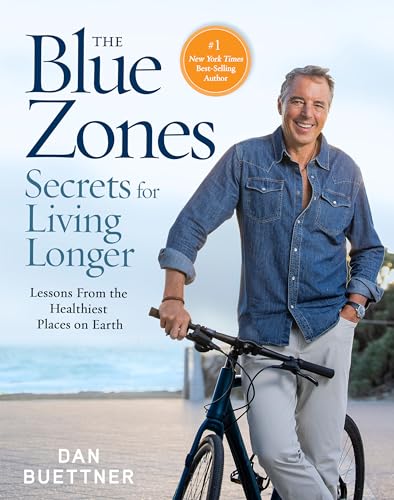
Ready to read The Blue Zones Secrets for Living Longer?
Get it on Amazon →