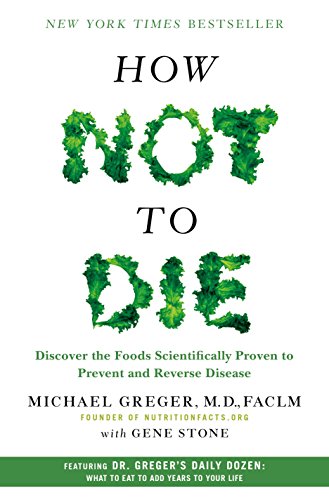
Few nutrition books arrive with the confidence of How Not to Die. Dr. Michael Greger, the physician behind NutritionFacts.org, wrote it after watching his grandmother reverse her heart disease through diet. The result is a bestseller with a blunt thesis: most of the diseases that kill Americans early are largely preventable. The weapon, he argues, is already in your kitchen.
What it's about
The book is organized around the leading causes of death in the United States, with a chapter devoted to each. Heart disease, several cancers, diabetes, high blood pressure, liver disease, kidney disease: Greger walks through the research on how a whole-food, plant-based diet may prevent or even help reverse each condition. He writes with the zeal of a prosecutor, stacking citation after citation. The book carries thousands of references, which gives it an unusual density for a mainstream health title.
The second half is practical. Greger introduces his Daily Dozen, a checklist of foods he recommends eating every day: beans, berries, cruciferous vegetables, flaxseed, greens, whole grains, turmeric among them. There is a free companion app, which helped turn the checklist into a lifestyle for many readers. Co-written with Gene Stone, the book donates its proceeds to charity, a detail Greger's fans cite often as proof of his motives.
Why everyone's talking about it
Published in 2015, the book became a New York Times bestseller. It remains one of the defining texts of the plant-based movement, cited by everyone from casual vegans to physicians practicing lifestyle medicine. Greger's charisma helps; his lectures and videos have a devoted following, so the book landed with a built-in audience. It also arrived as interest in food-as-medicine was surging, which made its sweeping promise feel timely rather than fringe.
The verdict, for now
This is an energizing, genuinely useful book if you want motivation to eat more plants; almost no one disputes that the Daily Dozen foods are good for you. The trouble is the certainty. Critics, including sympathetic nutrition scientists, have argued that Greger leans heavily on observational studies while presenting conclusions with near-clinical confidence, sometimes citing small or weak trials as if they settled the matter. Reversal claims in particular outrun the evidence in places. Read it as an enthusiastic case for one side of an ongoing scientific debate, not a final ruling. Adopt the vegetables; keep some skepticism about the death-proofing.
Read it if you loved
Ready to read How Not to Die?
Get it on Amazon →