John Green built his career on novels about teenagers facing mortality, then on essays that found meaning in everyday things. Everything Is Tuberculosis fuses both instincts into his first full work of nonfiction storytelling. It is a short book about the world's deadliest infectious disease, told through one young man's fight to survive it. It debuted at number one and turned Green's enormous online community into an unlikely army of tuberculosis activists.
What it's about
In 2019 Green visited a hospital in Sierra Leone and met Henry Reider, a small, charismatic boy he assumed was about nine. Henry was seventeen, his growth stunted by years of drug-resistant tuberculosis. Their friendship anchors the book. Around Henry's story Green wraps the strange cultural history of TB: the era when "consumption" was romanticized as the disease of poets and delicate beauty, the sanatorium age that reshaped cities and fashion, the antibiotic breakthroughs that were supposed to end it all.
The sting is in the present tense. Tuberculosis is curable and has been for decades, yet it still kills well over a million people a year, almost entirely in poor countries. Green walks through exactly why: drug prices, patent fights, diagnostic machines sold at margins that poor health systems cannot afford and a global attention economy that decided TB was a solved problem. The disease persists, he argues, not because we lack the science but because we have not chosen to spend what a cure costs.
Why everyone's talking about it
Green's readers did not just buy the book. Nerdfighteria had already pressured a major diagnostics maker into cutting the price of TB tests before publication and the book poured fuel on that campaign. It became that rare bestseller with a measurable policy footprint, cited in coverage of global health funding fights throughout 2025. The writing itself earned praise for doing what Green does best: making one specific person impossible to look away from, then widening the lens until the injustice is undeniable.
The verdict, for now
This is advocacy nonfiction, openly so. Readers wanting a neutral history should know the argument comes with the territory. It is also brisk where some will want depth; the science gets sketched rather than excavated. But as a book that makes a distant statistic feel like a friend you cannot abandon, it is close to perfect. Read it in an afternoon. You will not think about "cured" diseases the same way again.
Read it if you loved
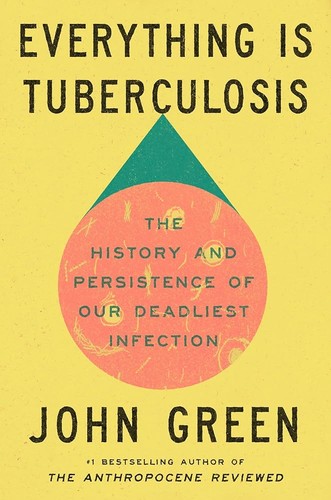
Ready to read Everything Is Tuberculosis?
Get it on Amazon →