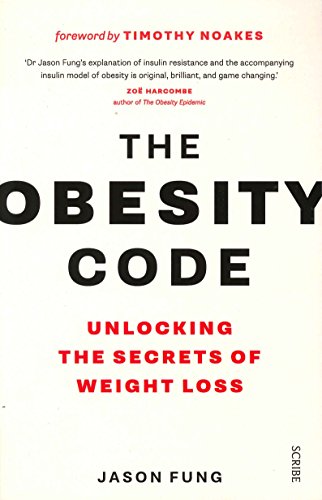
Jason Fung is a Toronto nephrologist who spent years watching patients with type 2 diabetes follow standard advice to eat less while exercising more, only to end up heavier than before. The Obesity Code, published in 2016, is his answer to why that keeps happening. His argument is blunt: obesity is a hormonal disorder, not a math problem. The book made him one of the loudest voices behind the intermittent fasting boom.
What it's about
Fung's central claim is that insulin, not calorie balance, is the master switch for fat storage. When insulin stays chronically elevated through refined carbohydrates, added sugar, constant snacking, the body raises its internal set weight. Cutting calories against that hormonal backdrop fails, he argues, because the body simply slows its metabolism to defend the set point. This is his explanation for the depressing statistic that most diets work for six months, then quietly reverse.
The second half turns diagnosis into prescription. Fung recommends slashing sugar, reducing refined grains, ending the modern habit of eating from wake-up to bedtime. His signature intervention is intermittent fasting: structured periods without food that let insulin fall low enough for the body to burn stored fat. He builds the case through decades of diet research, historical eating patterns, his own clinical experience treating patients with obesity, all delivered in a conversational, sometimes combative style aimed squarely at lay readers.
Why everyone's talking about it
The book arrived just as intermittent fasting went mainstream, so it became both a bestseller and a manifesto. Fung's confident dismissal of "calories in, calories out" gave frustrated dieters a new framework; his follow-ups, including The Diabetes Code, extended the argument. It also made him a lightning rod. Mainstream nutrition scientists have pushed back hard, noting that the carbohydrate-insulin model he champions remains contested, with several controlled feeding studies failing to support its strongest predictions.
The verdict, for now
As a reframe, this book earns its reputation. It is clear, readable, genuinely liberating for anyone who has cycled through failed diets while blaming their own discipline. The fasting guidance is practical; the insulin lens makes the modern food environment suddenly legible. The honest caveat is that Fung oversells certainty. He treats a live scientific debate as settled, leans on studies that fit his thesis, waves away energy balance more completely than the evidence allows. Read it as a provocative argument worth testing against your own experience, not as the final word on metabolism. On those terms it remains one of the most influential nutrition books of its decade.
Read it if you loved
Ready to read The Obesity Code?
Get it on Amazon →