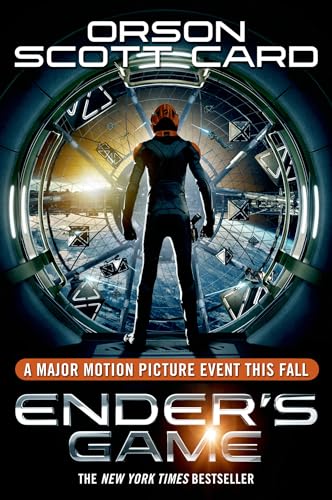
Few science fiction novels get handed to as many twelve-year-olds as military officers. Ender's Game manages both. Orson Scott Card's 1985 novel won the Hugo award as well as the Nebula, spawned a sprawling series, landed on Marine Corps reading lists; four decades later it remains the book people reach for when they want to explain what military science fiction can do. It is also a book that readers have argued about, fiercely, for most of that run.
What it's about
Earth has survived two wars against an insectoid alien species, the Formics, known dismissively as the buggers. Convinced a third war is coming, the International Fleet breeds and recruits gifted children, then ships the best of them to Battle School, an orbiting academy where tactics are taught through zero-gravity war games. Andrew "Ender" Wiggin arrives at age six, a third child in a world that restricts families to two, already marked as humanity's best hope.
What follows is a pressure-cooker story of isolation by design. Ender's teachers rig the games against him, cut him off from allies, escalate every conflict, because they believe an unbeatable commander can only be forged through relentless unfairness. The battle room sequences are justly famous; the novel's real subject is the cost of turning a child into a weapon, a question Card sharpens with a final twist that has become one of the genre's most discussed endings.
Why everyone's talking about it
Ender's Game persists because it works on two levels at once. Teenagers read it as an underdog story about a brilliant kid beating a rigged system. Adults reread it as something darker: a meditation on manipulation, empathy, the morality of preemptive war. Its sequel, Speaker for the Dead, took the Hugo as well as the Nebula again, a back-to-back sweep that cemented Card's stature. The 2013 film adaptation, plus decades of classroom adoption, keeps funneling in new readers who then discover the long-running debate around the author himself, whose public opposition to gay marriage prompted boycotts and soured many fans.
The verdict, for now
The novel earns its reputation. The pacing is ruthless, the battle room is unforgettable, the ending still lands. The honest caveat: these children think and talk like miniature adults, which strains belief, while critics have long argued the book works too hard to absolve Ender of the violence he commits, letting intention outweigh consequence. Read it for the propulsive story; stay for the argument it starts. Both are worth your time.
Read it if you loved
Ready to read Ender's Game?
Get it on Amazon →