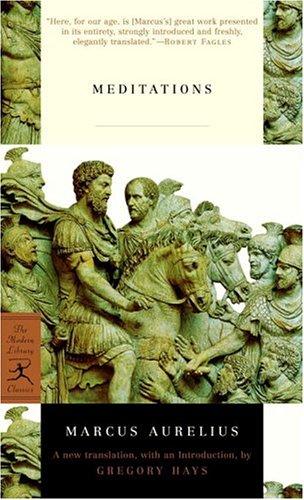
Most philosophy books are written to persuade an audience. Meditations was written to persuade one person: the author himself. Marcus Aurelius, ruler of the Roman Empire, kept a private journal to remind and discipline his own mind and never intended anyone else to read it. That is exactly why, nearly two millennia later, it still feels less like a lecture than a wise friend talking you down.
What it's about
There is no narrative and no argument to follow. Instead there are short, direct entries, notes the emperor made to steady himself while running an empire through war and plague. Again and again he circles the same Stoic core: concentrate only on what is within your control, accept what is not, do the work in front of you, treat others with patience and remember constantly that fame, grievance and even life itself are fleeting.
What makes it endure is the voice. This is one of the most powerful people who ever lived reminding himself to be humble, to get out of bed, to not be irritated by fools, to face death without fear. The advice is ancient but the struggles are entirely familiar, which is why readers keep it on the nightstand and reread a page at a time.
Why everyone's talking about it
Stoicism has had a major modern revival, championed by writers, athletes and founders and Meditations sits at the center of it as the movement's most beloved primary text. The Gregory Hays translation in particular is widely recommended for making the ancient language feel immediate and clear.
If you want practical philosophy you can actually live by, this is the essential Stoic book, best read slowly, a passage at a time, rather than straight through. Newcomers should choose a modern translation, since older ones can feel stiff and accept that its journal form means some repetition. Come for the calm, durable wisdom and stay for the strange intimacy of reading an emperor's private notes to himself.
The verdict, for now
Read it a little at a time and keep it close. Come for the foundational text of Stoicism, stay for advice on fear, anger and mortality that has outlasted the empire that produced it. Few books this old still feel this useful on an ordinary Tuesday.
Read it if you loved
Ready to read Meditations?
Get it on Amazon →