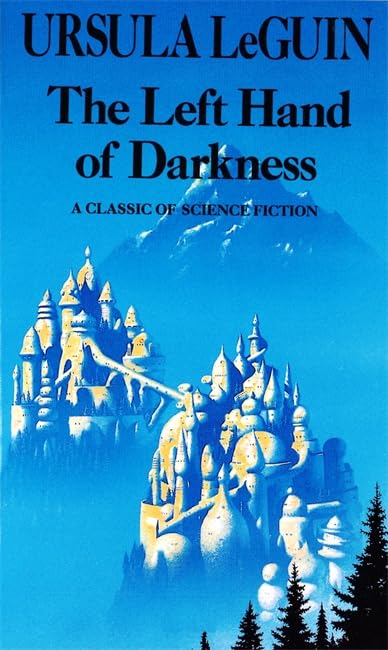
Published in 1969, Ursula K. Le Guin's The Left Hand of Darkness won both the Hugo and Nebula awards; more than half a century later it remains the book people reach for when they want proof that science fiction can be literature. It is a first-contact story, a political thriller, an anthropological field report all at once. Mostly, though, it is a question: what would humanity look like without fixed gender?
What it's about
Genly Ai is an envoy from the Ekumen, a loose federation of human worlds, sent alone to the ice-bound planet Gethen to invite its nations into the fold. Gethenians are ambisexual: for most of the month they have no fixed sex, entering a brief fertile phase called kemmer in which they may become either male or female. Genly, a conventionally gendered outsider, spends much of the book failing to read the people around him, which is exactly the point Le Guin is making about the reader too.
His fate becomes tangled with Estraven, a disgraced politician from the kingdom of Karhide whose motives Genly persistently misjudges. Court intrigue gives way to exile, then imprisonment in the rival state of Orgoreyn, then the novel's famous final movement: a desperate trek across a glacial ice sheet that stands with the great survival passages in fiction. The plot is simple; the texture, built from myths, field notes and shifting narrators, is anything but.
Why everyone's talking about it
The book has never really left the conversation. It is a fixture of best-of-the-genre lists, a staple of university syllabi, a touchstone for nearly every later writer exploring gender in speculative fiction, from Ann Leckie to Becky Chambers. Ongoing cultural debates about gender identity have only sharpened its relevance; readers keep rediscovering that a novel written in 1969 anticipated questions the culture is still arguing about today.
The verdict, for now
The criticisms are real. Le Guin used "he" for all Gethenians, a choice she herself later questioned in her essays, since it quietly re-genders the very people the book imagines beyond gender. The opening chapters move slowly, dense with invented politics; readers expecting propulsive sci-fi sometimes stall out before the ice. Stay with it anyway. The Estraven storyline builds toward one of the genre's most affecting endings, the worldbuilding rewards every ounce of patience; few novels in any genre ask better questions of their readers. This one has earned every bit of its reputation.
Read it if you loved
Ready to read The Left Hand of Darkness?
Get it on Amazon →