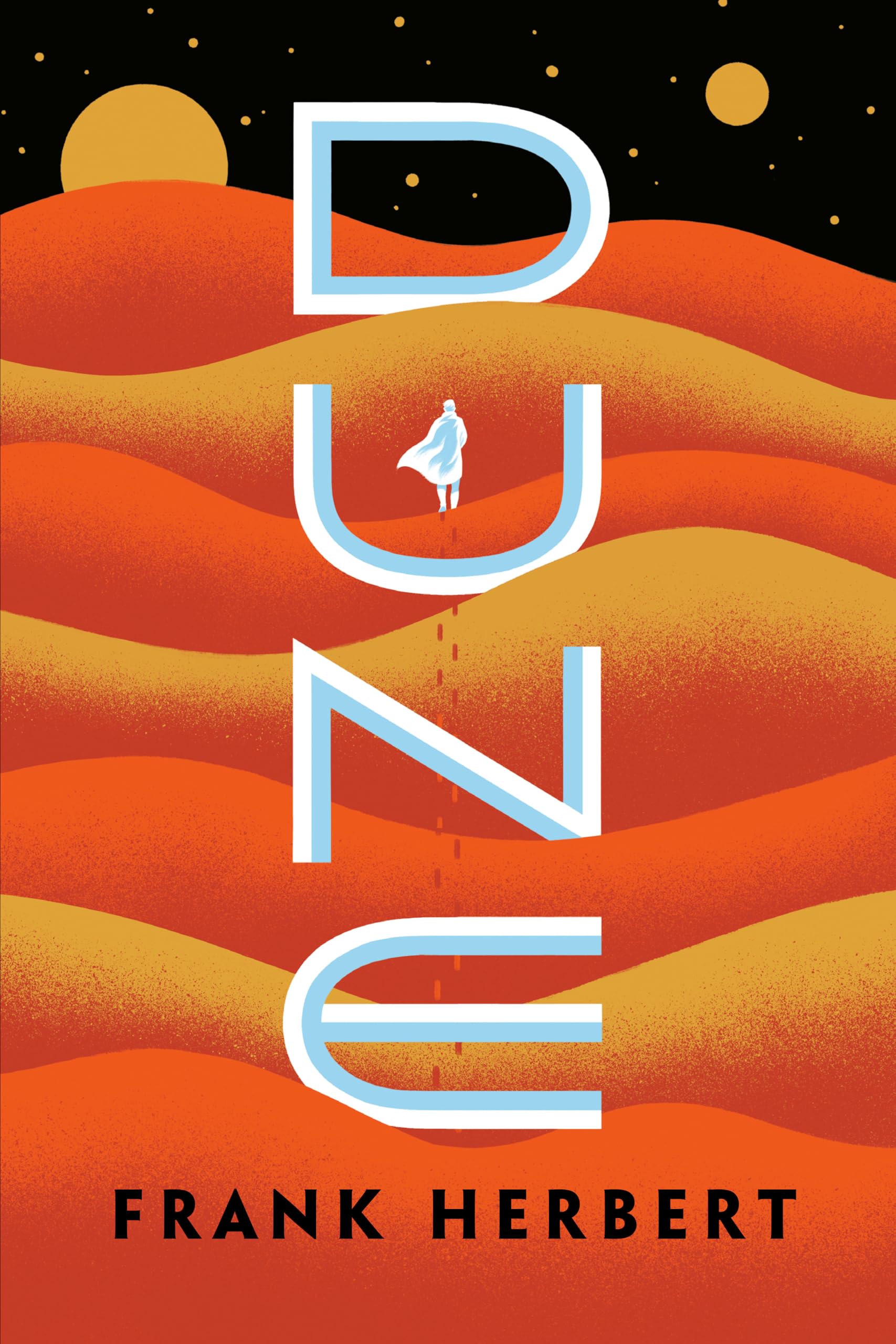
There is a reason every space epic since 1965 lives in the shadow of a single desert planet. Dune invented so much of what we now take for granted in science fiction that reading it can feel like visiting the source of a river. Frank Herbert built a whole universe (its politics, its religion, its ecology, its economy) and then dropped one teenage boy into the middle of it to see whether he would break or transform.
What it's about
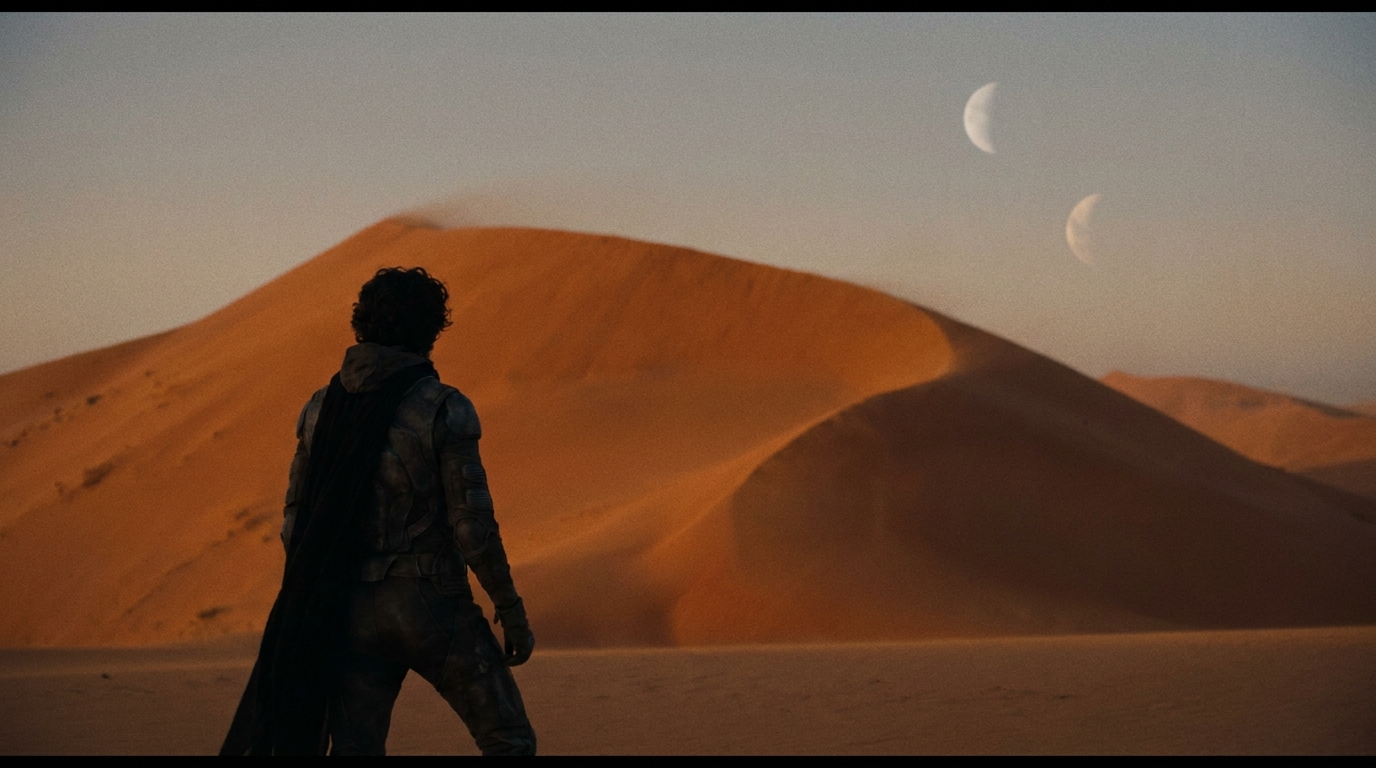
The boy is Paul Atreides, son of a duke and the planet is Arrakis, called Dune: a scorched world of sand and thirst that happens to be the only source of "spice," the substance that makes interstellar travel and long life possible. When Paul's family is handed control of Arrakis and then betrayed, he flees into the deep desert and falls in with the Fremen, a hardened native people who have a prophecy about a messiah and a very personal relationship with the monstrous sandworms that rule the dunes.
From there the novel becomes a slow, inexorable rise: Paul learning the desert, learning power and learning what it costs to become the thing a whole people has been waiting for. Herbert is as interested in the machinery of empire as in the hero's journey and he keeps asking an uncomfortable question underneath the adventure: what happens to everyone else when a charismatic savior actually arrives.
Why everyone's talking about it
Dune has never really left the conversation, but the Villeneuve films detonated it back into the mainstream and a new generation is discovering that the book is stranger, denser and more political than any adaptation can hold. It is the best-selling science fiction novel of all time for a reason: the world-building is total, the scope is operatic and the ideas keep paying off decades later.
If you love immersive world-building and do not mind a book that asks you to keep up, this is the mountain worth climbing. Newcomers should know the opening chapters throw a lot of invented vocabulary at you at once. Push through the first fifty pages; the language clicks into place and then the desert swallows you whole. Readers who want brisk, plot-forward action may find the pace stately. That deliberateness is the point.
The verdict, for now
Read it and give it room. Come for the sandworms and the spice, stay for a saga about power, prophecy and the price of belief that has been quietly shaping the genre for sixty years. Some books are called classics out of habit. This one earns it on every page.
Read it if you loved
Ready to read Dune?
Get it on Amazon →