Some science fiction novels age into curiosities. Hyperion, published in 1989, aged into a pillar. Dan Simmons took the frame structure of The Canterbury Tales, aimed it at the far future, then filled it with monsters, dying gods, poetry; the result won the Hugo Award and still sits near the top of nearly every "best sci-fi ever" list worth reading.
What it's about
On the eve of interstellar war, seven pilgrims travel to the distant world of Hyperion, home of the Time Tombs and the Shrike, a towering metal creature that kills without explanation and may grant one wish to a single pilgrim. As they travel, each tells the story of what brought them to this final journey. A priest recounts a horrifying discovery in Hyperion's backcountry. A soldier describes a love affair tangled with war. A poet, a scholar, a detective; every tale reframes the world around it.
The stories work as standalone novellas in wildly different registers: horror, military SF, noir, tragedy. The scholar's tale, about a father whose daughter ages backward after an incident at the Time Tombs, is widely considered one of the most affecting stories in the genre. Around the tales, Simmons builds the Hegemony of Man, its farcaster portals, the rebel Ousters, the scheming artificial intelligences of the TechnoCore, plus a running conversation with the life and poetry of John Keats.
Why everyone's talking about it
Hyperion never really left the conversation. It won the Hugo, launched the four-book Hyperion Cantos, has spent decades in development hell as a film or series, which keeps refreshing interest every few years. Booktok and sci-fi forums rediscover it constantly, usually through the priest's tale, which reads like literary horror smuggled into a space opera. For readers raised on modern epics, it is the rare classic that feels ambitious rather than dusty.
The verdict, for now
The honest caveat: Hyperion is half a novel. It ends at the climax with almost nothing resolved; you are effectively committing to The Fall of Hyperion the moment you start. The tales are also uneven, with a couple of pilgrims' stories landing far softer than the best two or three, while Simmons's fondness for Keats can shade into showing off. None of that sinks it. If you want science fiction with genuine literary architecture, real horror, real grief underneath the spectacle, this remains one of the essential starting points. Go in knowing it is a two-book journey.
Read it if you loved
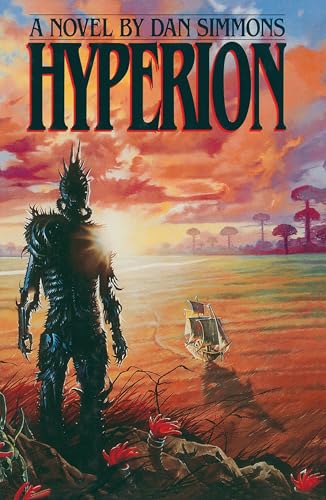
Ready to read Hyperion?
Get it on Amazon →