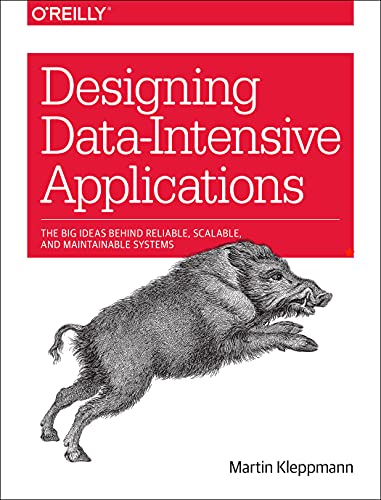
Ask ten senior software engineers for one book recommendation and you will hear this title from most of them, usually with the same phrase attached: just read it. Martin Kleppmann's Designing Data-Intensive Applications, the O'Reilly book with the wild boar on the cover, has been the de facto curriculum for backend and systems engineering since 2017. It is that rare technical book that explains not just how data systems work but why they are built the way they are, which is exactly why it refuses to go out of date.
What it's about
The book moves in three acts. First, the foundations: what reliability, scalability and maintainability actually mean, how databases store and retrieve data under the hood, why a log-structured storage engine and a B-tree make different promises and how encoding decisions ripple through a system's life. Second, distributed data: replication, partitioning, transactions and the honest, sometimes uncomfortable truths about what happens when networks fail, clocks drift and machines lie. The chapters on consistency and consensus are the clearest treatment of a famously slippery subject you will find outside a graduate course. Third, derived data: batch processing, stream processing and how large systems compose them into pipelines that can be rebuilt when, inevitably, something goes wrong.
Kleppmann's superpower is refusing to advocate. Every design is presented as a set of tradeoffs, with the failure modes stated plainly, so you finish understanding not what to pick but how to decide.
Why everyone's talking about it
Nearly a decade on, it still tops engineering reading lists, anchors interview prep and appears in onboarding docs at half the major tech companies. The AI boom sharpened the demand: the systems feeding models are exactly the data-intensive kind this book dissects. A long-awaited second edition has been in progress, which only intensified the discussion about how well the first has held up. The consensus: remarkably well, because ideas outlast tools.
The verdict, for now
This is not a light read. It is dense, occasionally academic and best absorbed a chapter at a time with a notebook nearby. Frontend-focused developers may want a gentler on-ramp first. But for anyone building or interviewing on backend systems, it remains the single highest-return technical book you can buy. The boar has earned its place on the shelf next to you, not in a drawer.
Read it if you loved
Ready to read Designing Data-Intensive Applications?
Get it on Amazon →