Laura Hillenbrand followed Seabiscuit with a survival story so extreme that reviewers kept reaching for the word "unbelievable." Unbroken traces the life of Louis Zamperini, a 1936 Olympic runner turned World War II bombardier whose plane went down in the Pacific in May 1943. What happened next, weeks adrift on a raft followed by two years in Japanese prison camps, turned this 2010 biography into one of the defining works of narrative nonfiction of its era.
What it's about
Zamperini grew up in Torrance, California, a chronic delinquent who redirected his talent for outrunning the police into competitive track. He made the U.S. Olympic team as a teenager, ran the 5,000 meters in Berlin, then enlisted when war came. As a bombardier on a B-24, he survived a harrowing mission over Nauru before a rescue flight crashed into the ocean. Zamperini and pilot Russell Allen Phillips drifted roughly 2,000 miles on a raft over 47 days, fending off sharks, starvation and strafing from a Japanese plane.
Rescue never came; capture did. The book's second half follows Zamperini through a series of POW camps where he was starved, beaten and singled out for torment by a sadistic corporal named Mutsuhiro Watanabe, whom prisoners called the Bird. Hillenbrand then follows him home, where the war kept going in his head: nightmares, rage, alcoholism, a marriage near collapse. The final chapters cover his conversion at a 1949 Billy Graham crusade and his decision to forgive his captors.
Why everyone's talking about it
Unbroken spent years on the bestseller lists, sold millions of copies and became a 2014 film directed by Angelina Jolie. Part of the fascination is the story behind the story: Hillenbrand wrote it while largely housebound with chronic fatigue syndrome, conducting dozens of interviews with Zamperini by phone and working from archives she could not visit in person. The result reads like a thriller yet carries dense sourcing; her endnotes have become a case study in how far rigorous reporting can stretch.
The verdict, for now
As pure narrative craft, Unbroken is close to unimprovable; Hillenbrand paces catastrophe like a novelist. The honest caveat is that the middle stretch becomes a relentless catalog of atrocity; some readers find the accumulation numbing rather than moving. The postwar redemption arc also gets compressed treatment compared to the raft and camp sections, so the forgiveness that gives the book its title can feel more asserted than explored. It also leans heavily on Zamperini's own recollections of events sixty years past, which invites fair questions about small details. None of that dims the whole. This is one of the great survival stories in American nonfiction.
Read it if you loved
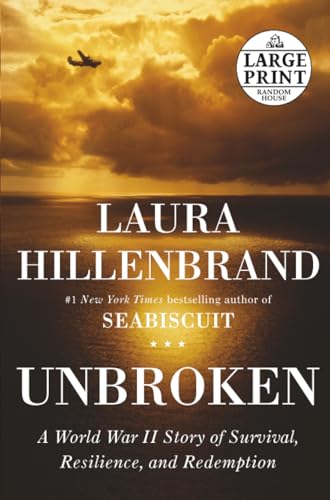
Ready to read Unbroken?
Get it on Amazon →