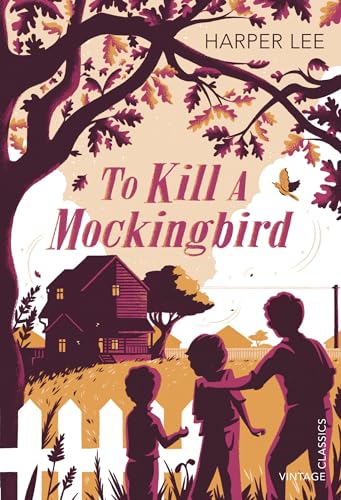
Few novels carry the cultural weight of To Kill a Mockingbird. Published in 1960, awarded the Pulitzer Prize in 1961, taught in American classrooms for six decades, Harper Lee's story of racial injustice in Depression-era Alabama has become shorthand for the national conscience itself. That status is both deserved and worth interrogating, which is exactly why the book keeps landing on banned-book lists and best-of lists at the same time.
What it's about
Scout Finch, a sharp-eyed girl of six when the story opens, narrates a few pivotal years in the sleepy town of Maycomb, Alabama during the 1930s. Her widowed father Atticus, a lawyer of quiet conviction, agrees to defend Tom Robinson, a Black man falsely accused of assaulting a white woman. The town's reaction to that defense reshapes Scout's understanding of her neighbors, her family and the invisible rules governing both.
Running alongside the trial is a stranger, gentler mystery: the children's fascination with Boo Radley, the recluse next door who never leaves his house. Scout, her brother Jem and their summer friend Dill invent legends about him, then slowly learn how wrong easy legends can be. The two threads braid into a single lesson Atticus states outright: you never really understand a person until you climb into his skin and walk around in it. The mockingbird of the title stands for the innocent who is harmed anyway.
Why everyone's talking about it
The book has never really left the conversation. The 1962 film with Gregory Peck fixed Atticus in the cultural imagination; Aaron Sorkin's Broadway adaptation became one of the most successful American plays in history. The 2015 release of Go Set a Watchman, an earlier draft featuring a far less saintly Atticus, forced readers to reexamine the hero they grew up with. Meanwhile school districts continue to challenge or remove the novel, some objecting to its racial slurs, others to how it frames race altogether, which keeps pushing new readers toward it.
The verdict, for now
The honest case against the book is real: it is a story about racism told almost entirely through white eyes. Tom Robinson and Calpurnia get little interior life of their own, while Atticus has been fairly criticized as a white-savior figure whose nobility comforts more than it challenges. Read it anyway. Scout's voice remains one of the great narrations in American fiction, funny and clear-eyed at once; the courtroom scenes still land with force. It is best read now as a product of its moment, paired with Black-authored fiction of the same era rather than treated as the last word on injustice.
Read it if you loved
Ready to read To Kill a Mockingbird?
Get it on Amazon →