Few novels carry a reputation this heavy. The Great Gatsby is the book teachers hand sixteen-year-olds as the Great American Novel, the one that underperformed on release in 1925 and then outlived nearly everything published alongside it. Fitzgerald died in 1940 believing his work forgotten. Today his slim third novel is a permanent bestseller, a Broadway musical, a whole costume-party aesthetic. The question worth asking is whether the book underneath all that mythology still works. It does, mostly.
What it's about
Nick Carraway, a Midwestern bond salesman, rents a small house in West Egg, Long Island, in the summer of 1922. His neighbor is Jay Gatsby, a self-made millionaire of murky origins who throws enormous parties he barely attends. Across the bay live Daisy Buchanan, Nick's cousin, along with her wealthy, brutish husband Tom. Gatsby, it emerges, built his entire glittering life for one purpose: to win back Daisy, whom he loved as a penniless young officer five years earlier.
Fitzgerald uses that simple love triangle to anatomize the American Dream itself. Gatsby's new money can buy the mansion and the shirts but never the careless security of old money; the green light at the end of Daisy's dock became literature's most quoted symbol of longing for a reason. The story tightens over one hot summer toward betrayal, a car accident, a violent ending. At roughly 180 pages, it wastes nothing.
Why everyone's talking about it
The book never really left, but it keeps finding new engines. It entered the American public domain in 2021, unleashing a wave of retellings, graphic novels, a Broadway musical adaptation. BookTok rediscovers it every year, usually through the prose; lines like "so we beat on, boats against the current" still circulate as if they were written last week. And every era finds its own Gatsby: a story about inequality, reinvention, the hollowness of wealth reads differently in each new gilded age.
The verdict, for now
The prose earns the hype; sentence for sentence, Fitzgerald is nearly untouchable. The flaws are real, though. Daisy is more symbol than person, a complaint critics have made for decades; the women here mostly exist to be wanted, mourned or blamed. Some readers find the entire cast so unlikable that the tragedy lands cold rather than devastating. Read it anyway, ideally as an adult rather than as a conscript in sophomore English. It is short enough to finish in two sittings; it is rich enough to reread for decades.
Read it if you loved
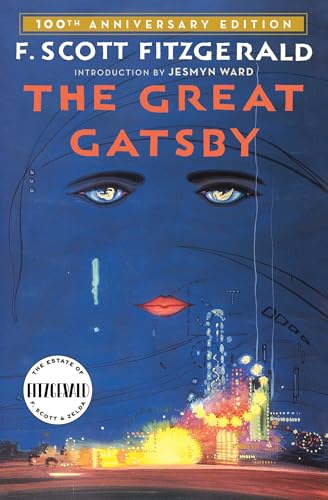
Ready to read The Great Gatsby?
Get it on Amazon →