After The Psychology of Money became a phenomenon, the pressure was on Morgan Housel to follow it. Same as Ever answers with a clever inversion. Everyone spends their energy trying to predict what will change, he notes and almost always gets it wrong. So this book does the opposite and studies the things that never change, because those, he argues, are the only reliable foundation for good decisions.
What it's about
The book is a collection of short, standalone essays, each built around a durable truth about human behavior. People have always been driven by greed and fear. We have always preferred a good story to a dry statistic. We consistently underestimate rare events, overreact to recent ones and forget the lessons of history right as we need them most. None of this shifts with technology or markets; it is, as the title says, same as ever.
Housel's point is practical. If the future is unpredictable but human nature is constant, then the smartest move is not forecasting but preparation, building margins of safety, expecting occasional chaos and understanding the psychological patterns that repeat in every generation. As in his first book, the lessons range well beyond money into risk, happiness and how we live, delivered in his signature calm, anecdote-rich style.
Why everyone's talking about it
Coming off one of the best-selling finance books of the era, Same as Ever arrived as a hotly anticipated sequel and landed on bestseller lists immediately. Housel's readers trust him precisely because he avoids hype and predictions and this book leans fully into that trust.
If you loved The Psychology of Money, this is more of the same wisdom aimed at a slightly wider target, ideal for readers who like big, portable ideas in bite-sized chapters. Those hoping for a tightly argued single thesis should know it is a mosaic of essays rather than a linear book and some ideas will feel familiar. Come for the timeless patterns and stay for a genuinely useful reframe of how to think about an unknowable future.
The verdict, for now
Read it in pieces, the way it is built. Come for the counterintuitive focus on what never changes, stay for a calm, quotable guide to behaving well amid uncertainty. It confirms that Housel's real subject was never money at all, but human nature.
Read it if you loved
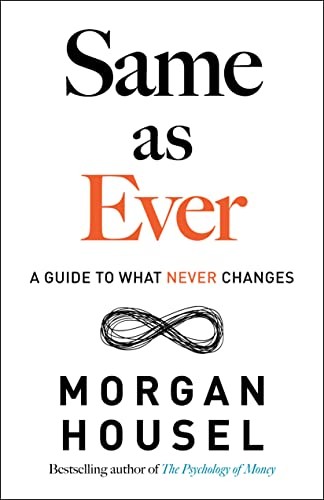
Ready to read Same as Ever?
Get it on Amazon →