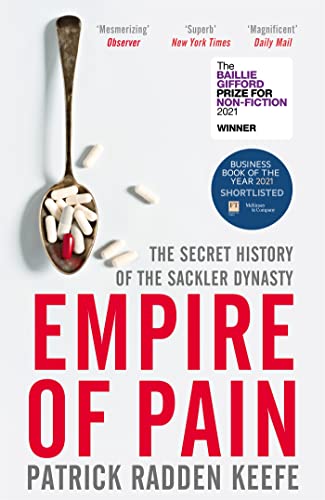
Some dynasties put their name on museums. The Sacklers put it on the Met, the Louvre, Oxford, Harvard; what they kept off the nameplates was the source of the money. Patrick Radden Keefe's Empire of Pain traces three generations of the family that built Purdue Pharma, launched OxyContin in 1996 and spent decades insulating its fortune from the opioid crisis that followed. It reads like a thriller. It lands like an indictment.
What it's about
Keefe starts long before OxyContin, with Arthur Sackler, the brilliant older brother who essentially invented modern pharmaceutical advertising while marketing Valium in the 1960s. Arthur's genius for selling medicine to doctors became the family playbook. His brothers Mortimer and Raymond bought a small company called Purdue Frederick, which their heirs would transform into Purdue Pharma. Arthur died before OxyContin existed; his descendants have spent years pointing this out, though Keefe argues the marketing machinery he built made everything after him possible.
The second half follows Richard Sackler's push to launch OxyContin as a blockbuster painkiller, the aggressive sales tactics that downplayed its addictive potential, the mounting overdose deaths, the guilty plea in 2007, the lawsuits, the bankruptcy maneuvering. Keefe builds the account from court filings, internal documents, depositions and hundreds of interviews. The Sacklers themselves declined to speak with him, a refusal that shadows every chapter.
Why everyone's talking about it
The book won the 2021 Baillie Gifford Prize for nonfiction, landed on nearly every year-end best list and cemented Keefe, already acclaimed for Say Nothing, as one of the sharpest narrative journalists working. It arrived as museums were stripping the Sackler name from their walls, so the book felt less like history than live ammunition. Beth Macy's Dopesick and the ensuing prestige TV adaptations had primed audiences; Keefe supplied the definitive family portrait.
The verdict, for now
This is investigative writing at close to its ceiling: propulsive, precise, coldly furious without ever raising its voice. The fair criticism is that it is a prosecutor's brief. Because the family refused to participate, their perspective arrives mostly through lawyers and old memos, so the portrait can feel airless in its certainty. Readers wanting more time with the crisis's victims should pair it with Dopesick, since Keefe keeps his lens fixed on the dynasty rather than the devastation. Those are quibbles about a 450-page book that never drags. If you read one account of how the opioid epidemic was manufactured, sold and shielded, make it this one.
Read it if you loved
Ready to read Empire of Pain?
Get it on Amazon →