A destitute ex-student climbs a St. Petersburg staircase with an axe hidden under his coat, convinced that certain extraordinary men stand above the moral law. What follows is not a whodunit but a why-dunit: hundreds of pages inside a mind unraveling under the weight of its own theory. Every psychological thriller written since 1866 has been quietly borrowing from this one.
What it's about
Rodion Raskolnikov is brilliant, broke and half-starved in the slums of imperial St. Petersburg. He has published an article arguing that history's great men earn the right to step over ordinary morality in pursuit of higher aims. To test whether he belongs in that category, he murders an elderly pawnbroker. The crime itself takes only a few pages. The punishment takes the rest of the book; almost none of it comes from the courts.
Dostoevsky turns the aftermath into the real story. Raskolnikov spirals through fever, paranoia and self-justification while Porfiry Petrovich, the investigating magistrate, circles him in interrogation scenes that read like chess played with a loaded gun. Meanwhile Sonya, a young woman forced into prostitution to feed her family, becomes the unlikely conscience of the novel. The question is never whether Raskolnikov did it. It is whether he can keep living inside a theory the murder has already disproved.
Why everyone's talking about it
Crime and Punishment never really left the conversation, but it has had a visible second life lately. The classics revival on BookTok treats Dostoevsky as a rite of passage; readers post their marked-up copies the way earlier generations posted gym selfies. A steady stream of fresh English translations, including Michael Katz's recent one, has softened the nineteenth-century stiffness that scared people off older editions. Its central question, whether ends can justify brutal means, maps onto nearly every modern argument about power. The book keeps finding new readers because that question never expires.
The verdict, for now
This is a masterpiece with real friction. The pacing sags in the middle stretches, where subplots involving Raskolnikov's sister and her suitors can feel like a different, baggier novel. Russian naming conventions mean every character answers to three names, which is genuinely disorienting on a first read. Many critics have also argued that the epilogue's turn toward redemption feels rushed next to the hundreds of pages of torment before it. None of that sinks it. The interrogation chapters alone justify the classic status; the fever-dream interiority still feels shockingly modern. Pick a contemporary translation, keep a character list handy and give it fifty pages. It will do the rest.
Read it if you loved
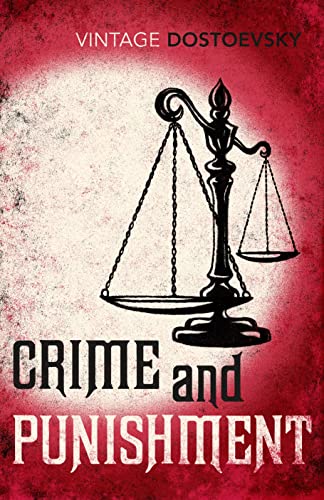
Ready to read Crime and Punishment?
Get it on Amazon →