Some memoirs open with a childhood anecdote. Trevor Noah opens with the law that made his existence a crime: under apartheid, a relationship between a Black woman and a white man carried a prison sentence. Born in 1984 to a Xhosa mother and a Swiss father, Noah spent his earliest years kept indoors, hidden from a state that classified his very body as evidence. That premise alone would carry a book. What his mother does with the rest of it is the real story.
What it's about
The book runs as a series of standalone essays rather than a straight chronology. Noah moves through Soweto churches, township schoolyards, the pirated-CD hustle he ran as a teenager, with each chapter prefaced by a short primer on the piece of apartheid machinery that shaped it. The recurring subject is belonging: too Black for white spaces, too light-skinned for Black ones, Noah learns early that language is his passport. He picks up English, Xhosa, Zulu, Afrikaans, some German, slipping between worlds that were engineered never to touch.
The real protagonist is his mother, Patricia Nombuyiselo Noah. Deeply religious, stubborn to the point of recklessness, she chose to have a mixed-race child in defiance of the state, then raised him to see past the horizon the system drew for him. She once threw him from a moving minibus to escape a threatening driver. The book's devastating final chapter, in which she survives being shot in the head by Noah's stepfather, reframes everything before it as a portrait of her ferocity.
Why everyone's talking about it
Published in 2016, just after Noah took over The Daily Show, the memoir became a multi-year New York Times bestseller. The audiobook, which Noah narrates himself in all the accents and languages, is routinely cited among the best ever recorded. The book has since migrated onto school syllabi and spawned a young-readers edition; a film adaptation with Lupita Nyong'o attached to play Patricia has been in development for years, keeping it in the conversation long past its release.
The verdict, for now
The essay structure is the book's one real weakness. Chapters loop back over the same years from different angles, so momentum sags in the middle stretch; readers hoping to learn how Noah got from Johannesburg street hustles to American television will find the comedy career almost entirely absent. The history primers can also feel simplified to anyone who knows South Africa well. None of that sinks it. As a memoir of surviving an absurd system with humor intact, it earns its reputation.
Read it if you loved
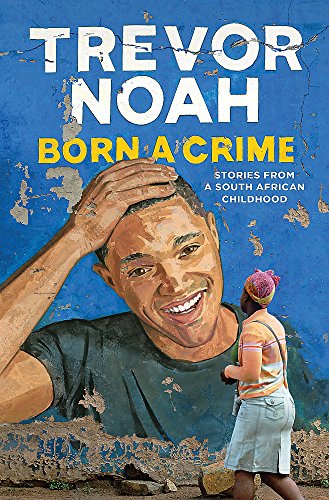
Ready to read Born a Crime?
Get it on Amazon →