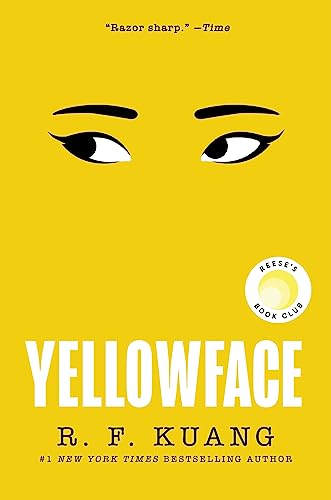
R.F. Kuang built her reputation on fantasy with The Poppy War trilogy and Babel. Then she turned around and wrote Yellowface, a contemporary satire with no magic at all, unless you count the dark sorcery of book publishing itself. It became one of the most argued-about novels of 2023 and it remains the book people press on friends with the warning that they will not be able to put it down.
What it's about
June Hayward is a white author whose debut flopped. Her frenemy Athena Liu is a literary darling with the career June believes she deserves. When Athena dies suddenly, June walks out of the apartment with Athena's unpublished manuscript about Chinese laborers in World War I. She polishes it, publishes it under the ambiguous pen name Juniper Song and rides it to the bestseller success she always wanted.
The novel is narrated entirely from inside June's head, which is the engine of the whole book. She justifies, rationalizes and rewrites her own theft in real time while the reader watches the walls close in. Kuang uses that unreliable voice to skewer the publishing industry: its tokenism, its appetite for scandal, its habit of anointing one marginalized writer at a time. Goodreads campaigns, Twitter pile-ons and industry gossip all get dragged into the light.
Why everyone's talking about it
Yellowface arrived with the rare combination of literary buzz and genuine word-of-mouth momentum. It hit the New York Times bestseller list, dominated BookTok for months and sparked endless debate about who gets to tell which stories. Part of the fascination is that Kuang, a bestselling Asian American author, chose to write from the perspective of a white woman stealing an Asian American writer's work. The book reads like an insider settling scores with an industry she knows intimately, which makes it feel dangerous in the best way.
The verdict, for now
This is a fast, mean, wickedly entertaining read that doubles as a critique of how books actually get made and sold. It is also not subtle. Critics who found it heavy-handed have a point; the satire often underlines its own jokes and the supporting characters exist mostly as props for June's spiral. The thriller turn in the final act divides readers too. None of that stops the momentum. If you have ever fallen down a rabbit hole of online literary drama, Yellowface will feel uncomfortably familiar and completely addictive. Go in for the voice, stay for the wreckage.
Read it if you loved
Ready to read Yellowface?
Get it on Amazon →