Few science books have reshaped their field and the wider culture the way The Selfish Gene did. Richard Dawkins took the established science of evolution and told it from a startling new angle and the result was a book that made a generation of readers see life itself differently, while starting arguments that have never fully died down.
What it's about
Dawkins's central move is a shift of perspective. Instead of asking what is good for the individual animal or the species, he asks what is good for the gene. From that vantage, living things look like elaborate survival machines that genes build to copy themselves into the next generation. It sounds bleak, but Dawkins uses it to explain, with striking clarity, why behaviors that puzzled biologists, especially cooperation and altruism, make perfect sense once you follow the genes rather than the organisms.
The book is careful about a point critics often miss: "selfish" describes the gene's effect, not a prescription for how humans should behave and Dawkins argues we are the one species that can rebel against our genetic programming. Along the way he coined a word that outgrew the book entirely, meme, to describe an idea that spreads and evolves like a gene. Lucid, vivid and argumentative, it is popular science that genuinely advanced the science.
Why everyone's talking about it
The Selfish Gene became one of the most influential and best-selling science books ever, credited with popularizing gene-centered evolution and shaping how both scientists and the public think about it. It also made Dawkins a public intellectual, for better and worse and the debates it provoked remain lively.
If you want to understand modern evolutionary thinking from the source, this is a landmark, clear enough for newcomers and rich enough to argue with. Readers should know the gene's-eye framing has always had thoughtful critics and Dawkins's later public persona colors how some approach the book. Come for the paradigm-shifting perspective and stay for a genuinely thrilling piece of scientific reasoning.
The verdict, for now
Read it for the idea that reorganized a whole science. Come for the gene's-eye view of evolution, stay for the elegant explanations of cooperation, altruism and why we are more than our genes. Decades on, it still changes how readers see the living world.
Read it if you loved
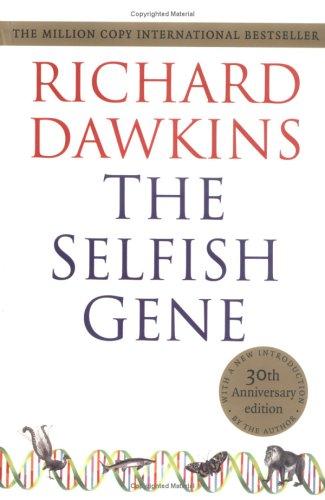
Ready to read The Selfish Gene?
Get it on Amazon →