The Fifth Season opens with the end of the world; then it makes you care about what comes after. N.K. Jemisin's 2015 novel launched the Broken Earth trilogy with a premise so confident that it dragged epic fantasy somewhere new: a dying supercontinent, a mother searching for her daughter, a civilization built on the backs of the people it fears most.
What it's about
The setting is the Stillness, a vast landmass wracked by seismic catastrophes so frequent that its cultures organize their entire lives around surviving the next one. These civilization-ending events are called Fifth Seasons. Standing between humanity and extinction are orogenes, people born with the power to quell earthquakes or unleash them. For that power they are hated, hunted, enslaved by a system that trains the useful ones and destroys the rest.
The story follows three women. Essun, whose husband has just murdered their young son after discovering what the boy could do. Damaya, a child taken from her family to be trained. Syenite, an ambitious orogene sent on a mission that will unravel everything she believes about her place in the world. How these threads connect is one of the book's great structural gambits; Jemisin uses second-person narration for Essun's chapters, a risky choice that pays off in ways best left unspoiled.
Why everyone's talking about it
The Fifth Season won the Hugo Award for Best Novel in 2016, making Jemisin the first Black writer to take that prize. Its two sequels then won the next two Hugos, an unprecedented three-peat that cemented the trilogy as a modern landmark. Beyond the hardware, the book landed because its fantasy of oppression felt urgent rather than abstract; readers recognized real systems of dehumanization inside its geology-powered magic. It remains a fixture on best-of-the-century lists nearly a decade later.
The verdict, for now
This is essential reading for anyone who wants to know where the genre has been headed. Fair warning, though: it is a demanding book. The second-person voice alienates some readers before the payoff arrives; the opening chapters drop you into dense worldbuilding jargon with little hand-holding. It is also relentlessly bleak, with violence against children on the page early. If you push through the disorientation, the reward is one of the most structurally daring, emotionally devastating fantasy novels of its generation. Start here, but know that the trilogy is one continuous story; you will want the sequels close at hand.
Read it if you loved
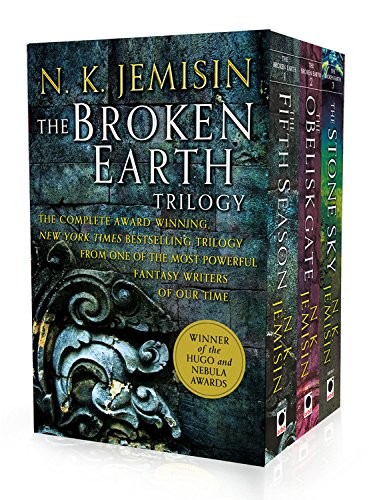
Ready to read The Fifth Season?
Get it on Amazon →