Nearly two centuries after Alexandre Dumas serialized it in a Parisian newspaper, The Count of Monte Cristo remains the template for the revenge epic. Prison break, buried treasure, a new identity, a slow-burn reckoning served cold over decades: every element that modern thrillers recycle was assembled here first, at a scale most modern thrillers would never dare attempt.
What it's about
Edmond Dantès is a young sailor in Marseille with everything ahead of him: a promotion to captain, a fiancée he adores, a future that looks settled. Then three envious men conspire to denounce him as a Bonapartist traitor. Without trial or explanation, he is locked away in the island fortress of the Château d'If, where years grind past while the world forgets him.
Inside, a fellow prisoner becomes his teacher, educating him in languages, science and history, then reveals the location of an immense fortune hidden on the isle of Monte Cristo. Armed with that treasure after a daring escape, Dantès reinvents himself as the mysterious Count. The back half of the novel is his patient, intricate campaign against the men who destroyed him, played out through Parisian society with the precision of a chess master who has spent years studying the board.
Why everyone's talking about it
The novel never really left the conversation. It has been adapted for film and television dozens of times, most recently in a lavish 2024 French production that became a major box-office hit in its home country and renewed international interest in the source text. Readers on social platforms keep rediscovering the unabridged version as a long-read challenge; the payoff chapters are regularly cited as some of the most satisfying in classic literature. Its themes of wrongful punishment, patience and the corrosive cost of vengeance keep finding new audiences.
The verdict, for now
This is one of the most purely entertaining novels of the nineteenth century, but honesty requires a warning about the commitment. Unabridged editions run well past a thousand pages; the Parisian middle section sprawls through subplots, poisonings and society intrigue that test even devoted readers before the threads snap taut. The plotting also leans hard on coincidence, a fair criticism since the book's serialized origins show. Abridged versions exist, though they tend to cut the texture that makes the ending land. If you can accept the length as part of the design, the slow accumulation of consequence is exactly what makes the final chapters hit so hard. Few books reward patience this generously.
Read it if you loved
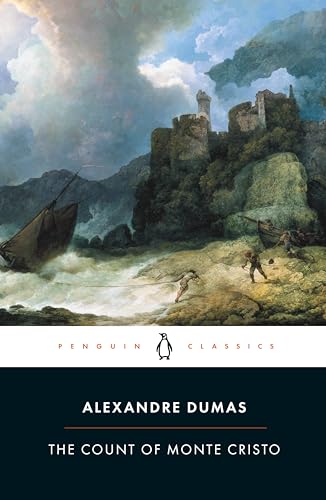
Ready to read The Count of Monte Cristo?
Get it on Amazon →