Every January the fitness industry sells the same confusion in new packaging. Michael Matthews made his name by refusing to play along. Bigger Leaner Stronger, first published in 2012, argues that building a lean, muscular body is boring in the best way: lift heavy weights a few hours a week, manage calories with simple arithmetic, ignore nearly everything else. It became one of the bestselling fitness books of its era on the strength of that promise.
What it's about
Matthews writes for the average man who wants to look good without living in the gym. His prescription centers on progressive overload: adding weight to a handful of compound lifts (squat, deadlift, bench press, military press) over time. He pairs that with flexible dieting, which treats fat loss as an energy balance problem rather than a purity contest. No food is forbidden; calorie targets plus adequate protein do the heavy lifting. The book also devotes considerable space to demolishing gym mythology, from spot reduction to muscle confusion to the supposed magic of fasted cardio.
The back half turns theory into a plan. Readers get a year-long training program built around heavy sets in low rep ranges, guidance on cutting and bulking cycles, plus a chapter sorting supplements by actual evidence, one that dismisses most of the industry's bestsellers. The tone is direct, occasionally salesy, always confident. It is deliberately a beginner-to-intermediate book; Matthews assumes no prior knowledge and repeats his core points often to make them stick.
Why everyone's talking about it
More than a decade after publication, the book still tops fitness recommendation lists and remains a default answer when beginners ask where to start. Its success spawned a small empire: Thinner Leaner Stronger for women, the Muscle for Life brand, a popular podcast, plus Legion Athletics, Matthews' own supplement company. That last venture keeps the conversation lively. A book famous for calling out supplement hype now sits atop a supplement business, a tension readers regularly debate.
The verdict, for now
As an on-ramp to evidence-based lifting, this remains one of the better choices around. The advice is sound, the program is followable, the myth-busting genuinely useful. The limitations are real, though. Little here is original; Matthews synthesizes standard strength-training science rather than advancing it. The repetition grates, while the promotional undertow toward his own products can feel at odds with the book's skeptical posture. Experienced lifters will find nothing new. Beginners, on the other hand, could do far worse.
Read it if you loved
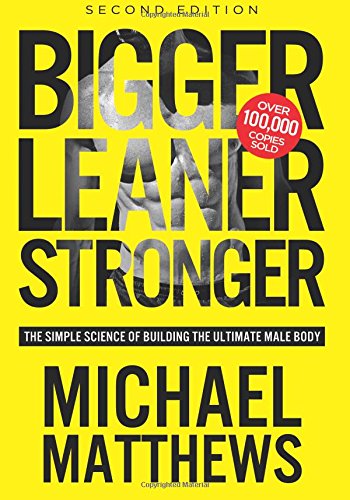
Ready to read Bigger Leaner Stronger?
Get it on Amazon →