
A well-seasoned cast iron skillet will outperform a $300 nonstick pan and last your entire lifetime. The trick is knowing exactly how to build, maintain, and repair that seasoning layer. This guide walks you through the complete process, from your very first seasoning to fixing common problems like flaking and rust, plus recommends the best cast iron skillet options if you are shopping for one in 2026.
What Cast Iron Seasoning Actually Is
Seasoning is not a coating you apply once and forget. It is a microscopically thin layer of polymerized oil that bonds to the iron surface through heat. When oil heats past its smoke point inside the skillet, its fatty acids break down, cross-link, and form a hard, plastic-like film. Stack enough of these layers, and you get a naturally nonstick, rust-resistant surface.
This matters because bare cast iron is porous and reactive. Without seasoning, it rusts on contact with moisture and turns acidic foods metallic. A good seasoning layer solves both problems while improving with every use.
The Best Oil for Seasoning Cast Iron
Not all oils polymerize equally. The best oil for seasoning cast iron has a high smoke point, a high concentration of unsaturated fats, and leaves a hard (not sticky) finish. Here is how the most popular options stack up.
The debate between flaxseed oil vs Crisco for cast iron seasoning comes down to durability versus ease of use. Flaxseed oil creates the hardest polymer layer, but it is finicky: too thick an application and it flakes. Crisco is more forgiving and what Lodge (the largest cast iron manufacturer) officially recommends.
Can you use olive oil to season cast iron? Technically yes, but we do not recommend it. Extra virgin olive oil has a low smoke point and contains particles that prevent even polymerization. You will end up with a sticky, blotchy surface.
Our recommendation: use Crisco or grapeseed oil for routine seasoning. Reserve flaxseed oil for a full strip-and-reseason restoration where you want maximum durability.
How to Season a Cast Iron Skillet: Step by Step
Whether you just bought a new skillet or need to reseason an old one, follow these steps exactly.
Step 1: Clean the Skillet Thoroughly
Wash the skillet with warm water and a small amount of dish soap. Yes, soap is fine on cast iron (the old warning about soap stripping seasoning dates back to when soap contained lye, which modern dish soap does not). Use a stiff brush or chainmail scrubber to remove any food residue.
For a brand new pre-seasoned cast iron skillet, this step removes factory residue and prepares the surface for your own seasoning layers. For a rusty skillet, see the restoration section below.
Dry the skillet completely with a towel, then place it on a burner over low heat for 2 minutes to evaporate any remaining moisture. Moisture is the enemy.
Step 2: Apply a Thin Layer of Oil
Pour about half a teaspoon of your chosen oil into the skillet. Using a lint-free cloth or paper towel, rub the oil over every surface: inside, outside, handle, and bottom. Then, using a clean section of the towel, wipe off as much oil as you can.
This is the most critical step. The layer should be so thin it looks like you removed all the oil. If you can see oil pooling or shining, you applied too much. Excess oil is the number one cause of cast iron skillet seasoning flaking.
Step 3: Bake Upside Down at 450 to 500 Degrees
Place the skillet upside down on the middle rack of a cold oven. Put a sheet of aluminum foil on the rack below to catch any drips. Heat the oven to 450°F (or 500°F if using flaxseed oil, which needs higher heat to polymerize properly).
Bake for one hour. The oil needs sustained heat above its smoke point to fully polymerize. Your kitchen will get smoky. Open a window and turn on the range hood.
Step 4: Cool in the Oven
Turn off the oven and leave the skillet inside until it reaches room temperature. This slow cooling prevents thermal shock and lets the polymer layer cure fully. Do not rush this step.
Step 5: Repeat 2 to 3 More Times
One round of seasoning is a start, but 3 to 4 total rounds build a noticeably better surface. Each layer is microscopically thin, and stacking them creates the smooth, dark finish that makes cast iron legendary.
After 3 to 4 rounds, the skillet should look uniformly dark brown or black and feel smooth to the touch.
The entire process takes about 4 to 5 hours (including cooling time between rounds). Plan to do this on a weekend afternoon when you can let the oven run.
How Often to Season Cast Iron
A full oven seasoning is not something you need to do every week. Here is a practical schedule:
After every use: Rinse, dry on the stove, and rub a very thin layer of oil on the cooking surface while it is still warm. This maintains the seasoning passively.
Every 3 to 6 months: Do a single round of oven seasoning if the surface looks dull, patchy, or food is starting to stick more than usual.
Full 3 to 4 round reseason: Only when the seasoning is severely damaged, flaking, or after stripping rust.
The more you cook with fat (frying, searing, sautéing with oil or butter), the less formal seasoning you will need. Cooking is seasoning.
How to Reseason a Rusty Cast Iron Skillet
Rust happens. Maybe you left the skillet soaking overnight, or it sat in a damp garage for years. The good news: cast iron is nearly indestructible. Here is how to reseason a rusty cast iron skillet and bring it back to life.
For Light Surface Rust
- Scrub the rust off with steel wool or a chainmail scrubber under warm water
- Wash with soap and dry immediately on the stove
- Follow the full seasoning process above (3 to 4 rounds)
For Heavy Rust or Damaged Seasoning
- Soak the skillet in a 50/50 solution of white vinegar and water for 1 to 3 hours (no longer, as vinegar can pit the iron)
- Scrub with steel wool until all rust is gone and you see bare gray iron
- Wash, dry immediately, and begin the full seasoning process from scratch
Common Mistakes to Avoid
Applying oil too thickly. This is the cause of 90% of seasoning problems. If oil pools during baking, it polymerizes unevenly and creates a bumpy, sticky, or flaky surface. When in doubt, wipe off more oil.
Using the wrong temperature. If your oven is not hot enough, the oil will not polymerize. It will just sit on the surface as a gummy, sticky layer. Aim for 450 to 500°F depending on your oil.
Skipping the preheat. Always put the skillet in a cold oven and let them heat together. Thermal shock from placing cold iron in a hot oven can cause warping, especially with thinner skillets.
Washing with harsh abrasives between uses. A chainmail scrubber is fine. Steel wool is only for rust removal or stripping seasoning. Using it after every meal strips the layers you are trying to build.
Cooking acidic foods too early. Tomato sauce, wine reductions, and vinegar-based dishes can strip fresh seasoning. Wait until you have a well-established seasoning (at least a month of regular cooking) before making your grandmother's marinara.
Storing while damp. Always dry on the stove and apply a thin oil layer before putting the skillet away. Store in a dry place with a paper towel between stacked pans to absorb any ambient moisture.
The Best Cast Iron Skillet for Every Budget
If you are shopping for the best cast iron skillet in 2026, here are the three options we recommend after analyzing thousands of reviews and testing the most popular models.
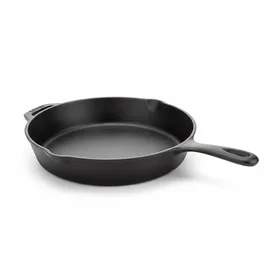
Lodge 10.25-Inch Cast Iron Skillet
Best for: Best cast iron skillet under $30 for beginners
The Lodge is the best cast iron skillet for beginners and the reason most people never need to spend more.
The Lodge cast iron skillet has over 98,000 reviews on Amazon and maintains a 4.7-star rating. At under $25, it is the best cast iron skillet under $50 by a wide margin. The pre-seasoned surface works well enough out of the box, though adding 2 to 3 rounds of your own seasoning with Crisco will noticeably improve it.
Is Lodge cast iron worth it? Absolutely. The Lodge 10.25-inch skillet delivers 95% of the performance of a $200 artisan skillet for less than the price of lunch.
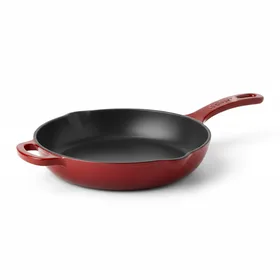
Le Creuset Enameled Cast Iron Skillet (9 Inch)
Best for: Best premium cast iron skillet for enthusiasts
If you want the beauty of cast iron without the seasoning upkeep, the Le Creuset enameled skillet is the premium pick.
The Lodge 10.25-inch skillet frequently drops to $14.88 during Amazon Prime Day and Black Friday. Set a price alert if you are not in a rush.
Quick Comparison: Lodge vs Le Creuset
For most people, the Lodge wins. The price difference is enormous, and both pans will last generations. The Le Creuset is a luxury for those who want the heat retention of cast iron without any seasoning maintenance.
Start with the Lodge 10.25-inch skillet at $24.90, season it properly using this guide, and you will have a pan that outperforms most nonstick cookware within a month of regular use.
A Note on Pre-Seasoned Cast Iron Skillets
Nearly every cast iron skillet sold today, including Lodge, comes pre-seasoned. This means the manufacturer applied a base layer of oil seasoning at the factory. It is functional out of the box: you can fry an egg on day one.
However, factory seasoning is a single thin layer. Think of it as primer, not paint. Adding your own 2 to 3 rounds of oven seasoning on top of the factory layer transforms the cooking surface from "adequate" to "exceptional." This is especially true for the best pre-seasoned cast iron skillet options in the under $50 range, where the factory finish tends to be rougher.
Among the 127 cast iron skillets in our database, products with 4.5+ star ratings and 1,000+ reviews share one common thread in customer feedback: seasoning instructions included in the box (or the lack thereof) is the number one factor determining whether buyers leave positive or negative reviews.
Troubleshooting: When Seasoning Goes Wrong
Sticky surface after seasoning: You applied too much oil. Strip the sticky layer with steel wool, wash, and reseason with a thinner application. Remember: wipe it on, then wipe it off.
Cast iron skillet seasoning flaking off: This happens when thick oil pools polymerize as a brittle sheet rather than bonding to the iron. Strip the flaking areas, scrub to bare metal, and reseason with very thin layers.
Bronze or brown color instead of black: This is normal for new seasoning. Cast iron does not turn jet black until it has accumulated many layers over weeks or months of cooking. Do not worry about color. Worry about performance.
Food sticking after seasoning: Preheat the skillet for 3 to 5 minutes before adding food, and use adequate fat (butter, oil). Even a well-seasoned skillet benefits from cooking fat. The seasoning prevents rust and provides a base layer of nonstick properties, but it is not Teflon.
Metallic taste in food: The seasoning layer is too thin or damaged, exposing bare iron to your food. Add more seasoning rounds and avoid acidic ingredients until the seasoning is well established.