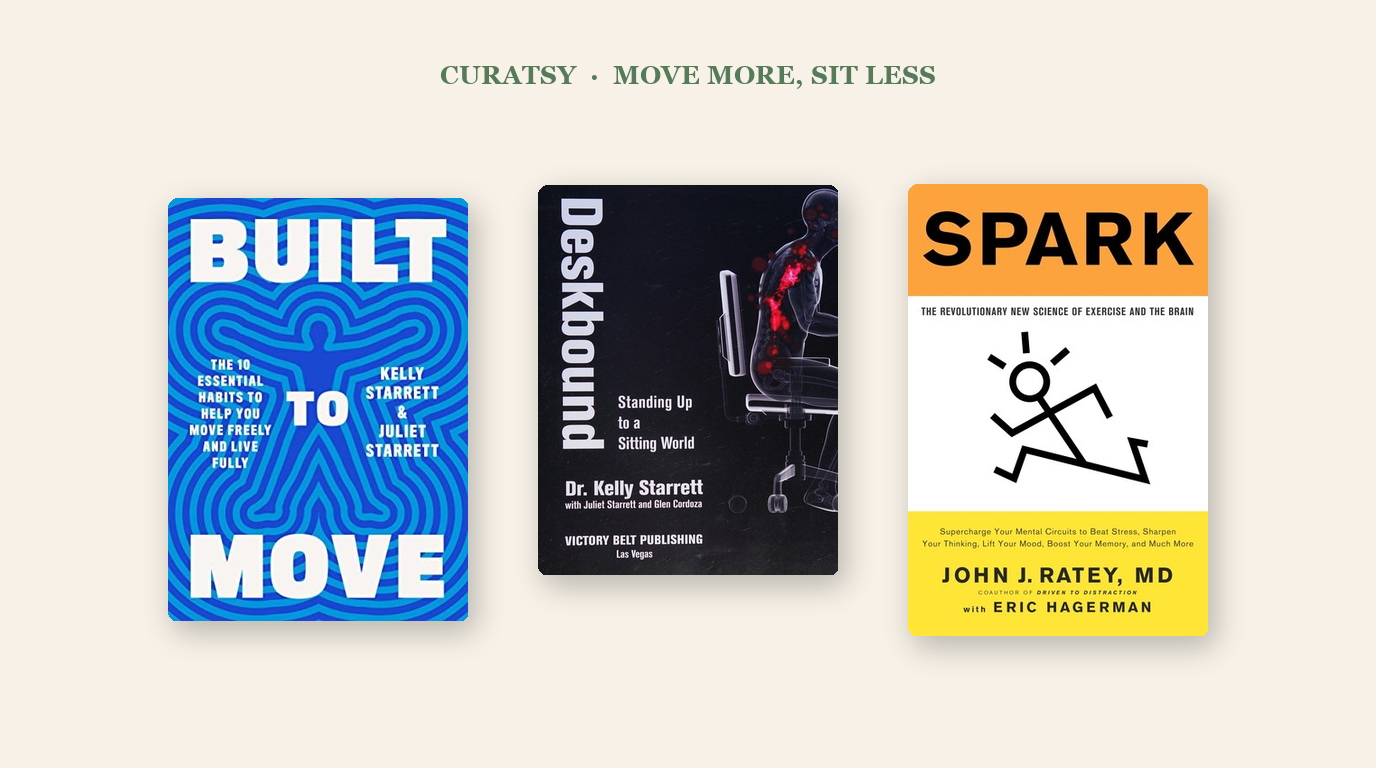
Sitting eight hours a day does quiet, cumulative damage: tight hips, a cranky back, a body that forgets how to move. The internet is full of posture influencers selling quick fixes. These books are the opposite. Every author below is a physical therapist, a biomechanist, or a movement scientist and every one explains both the real problem with a sedentary day and what actually undoes it. No gadgets required to start, just the science and the movements.
A note before you buy: these are books, not medical advice. If you have a specific injury or chronic pain, see a physical therapist first. These reads are for understanding your body and moving it better, not for diagnosing what is wrong.
Quick picks:
- The definitive book on sitting: Deskbound by Kelly Starrett, DPT. View on Amazon
- The easiest daily habits: Built to Move by Kelly and Juliet Starrett. View on Amazon
- Movement for your brain, not just your back: Spark by John Ratey, MD. View on Amazon
The desk-specific fixes
1. Deskbound by Kelly Starrett, DPT
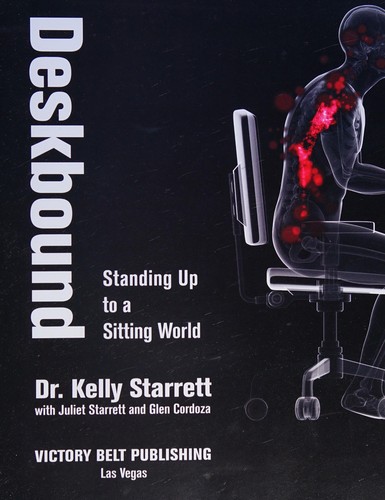
The Definitive Book on Sitting
Starrett is a doctor of physical therapy who trained a generation of coaches and Deskbound is the book written specifically for the person reading this at a desk. It lays out exactly what prolonged sitting does to your body and gives you a concrete playbook: how to stand and sit better, mobilize tight areas and build movement into a workday. It is the single most on-point book on this list.
Read this if you loved: The idea that you can fix your desk-broken body with knowledge instead of a chiropractor on retainer.
Honest note: It is dense and reference-like, more manual than beach read. Use it as a lookup guide for your specific aches, not a linear cover-to-cover read.
→ Buy on Amazon2. Built to Move by Kelly and Juliet Starrett
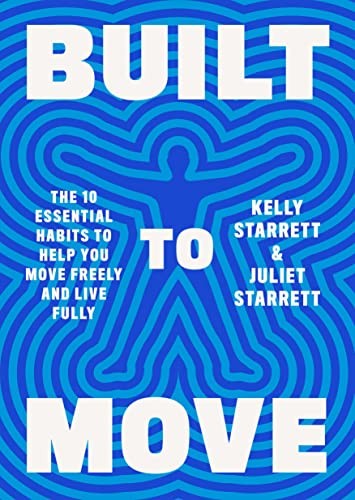
The Easiest Daily Habits
Where Deskbound is the deep manual, Built to Move is the friendly starter: ten simple daily practices to keep your body mobile for life, each with a quick self-test so you can see where you stand. It is the book to hand someone who is intimidated by mobility work, because every habit is small, clear and doable between meetings.
Read this if you loved: Atomic Habits, applied to your hips and shoulders instead of your inbox.
Honest note: It is intentionally approachable, so serious mobility nerds will want the depth of Deskbound too. As a starting point, it is close to perfect.
→ Buy on AmazonThe science of sitting and moving
3. Sitting Kills, Moving Heals by Joan Vernikos, PhD
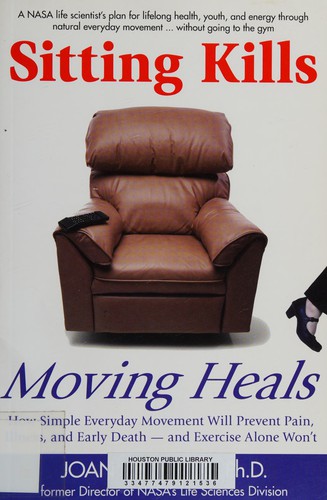
The NASA Scientist's Case for Constant Movement
Vernikos is a former director of life sciences at NASA who studied how astronauts' bodies deteriorate without gravity and she realized sitting does something similar to us on the ground. Her key insight is counterintuitive and freeing: it is not a single workout that matters most, but frequent, low-level movement all day. Standing up often beats one heroic gym session.
Read this if you loved: A genuinely new frame on a problem you thought you understood.
Honest note: It is short and a bit repetitive and the science is now a decade old. The core idea, move often rather than rarely and hard, has only been reinforced since.
→ Buy on Amazon4. Move Your DNA by Katy Bowman, MS
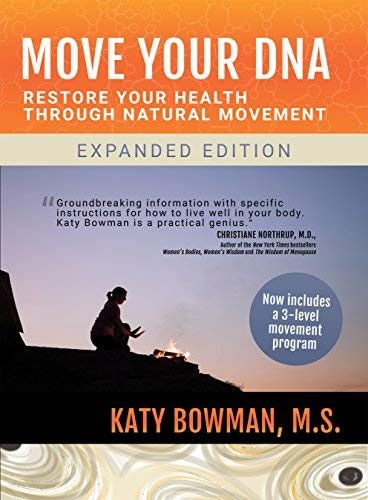
Movement as Nutrition
Bowman is a biomechanist and her big idea reframes everything: movement is like nutrition and most of us are starving for variety. A desk job is not just too little exercise, it is too little movement of too few kinds. She makes the case for a richer movement diet and shows how to add it to an ordinary life, no gym required.
Read this if you loved: In Defense of Food, but for how your body moves rather than what it eats.
Honest note: Her writing can get technical about biomechanics. Push through the denser passages for a genuinely mind-changing way to think about movement.
→ Buy on Amazon5. Exercised by Daniel Lieberman, PhD
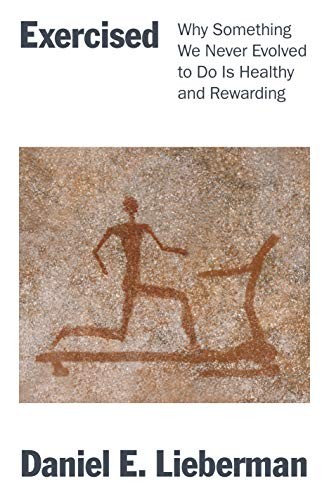
Why You Were Never Built to Sit
Lieberman is a Harvard evolutionary biologist and this is the big-picture answer to why sitting feels so bad: we evolved to move in specific ways and to rest in others and a modern chair fits neither. He cheerfully dismantles the myths (that we are lazy, that we must run, that sitting is uniquely evil) with evidence and wit, leaving you with a clear, guilt-free picture of what movement your body actually wants.
Read this if you loved: Sapiens, aimed squarely at your sedentary lifestyle.
Honest note: It is a science book, not a program, so you leave with understanding rather than a routine. Pair it with Deskbound for the practical half.
→ Buy on AmazonMovement for your brain
6. Spark by John Ratey, MD
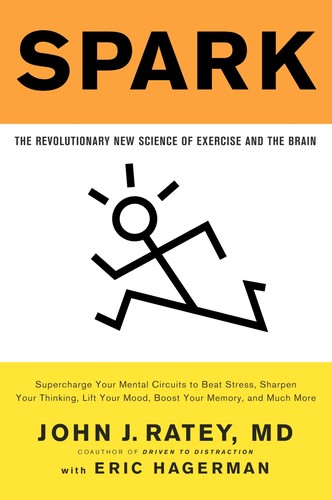
Exercise as Brain Fuel
Ratey is a Harvard psychiatrist and Spark is the book that connects moving your body to sharpening your mind. He walks through the research on how exercise improves focus, mood and memory, which is the argument that finally gets desk workers off their chairs: you move not just for your back, but for the very brain you sit down to use. It reframes a walk as the most productive thing you can do.
Read this if you loved: Any book that made you rethink a daily habit with hard science behind it.
Honest note: Some studies are older now, but the central finding, that movement is powerful medicine for the brain, has aged extremely well.
→ Buy on AmazonHow we chose these
We held to the rule the rest of the wellness internet ignores: if we could not verify the author's credential from a publisher or university bio in about two minutes, the book did not make the list. What remains is a clean set, two doctors of physical therapy, a biomechanist, a NASA life scientist, a Harvard evolutionary biologist and a Harvard psychiatrist. No posture influencers, no gadget pitches disguised as advice.
Prefer to listen? Several of these, Spark and Exercised especially, make excellent audiobooks for a walk, which is fitting. If you do not have a subscription yet, an Audible trial gets you the first listen at no cost.
Reading is half the fix. The other half is your setup. Once you know why sitting hurts, see our companion guide to the best desk wellness upgrades for people who sit all day, the walking pads, standing desks and ergonomic gear that put these books into practice.