Best Blue Light Therapy Devices for Skin: What the Data Actually Shows
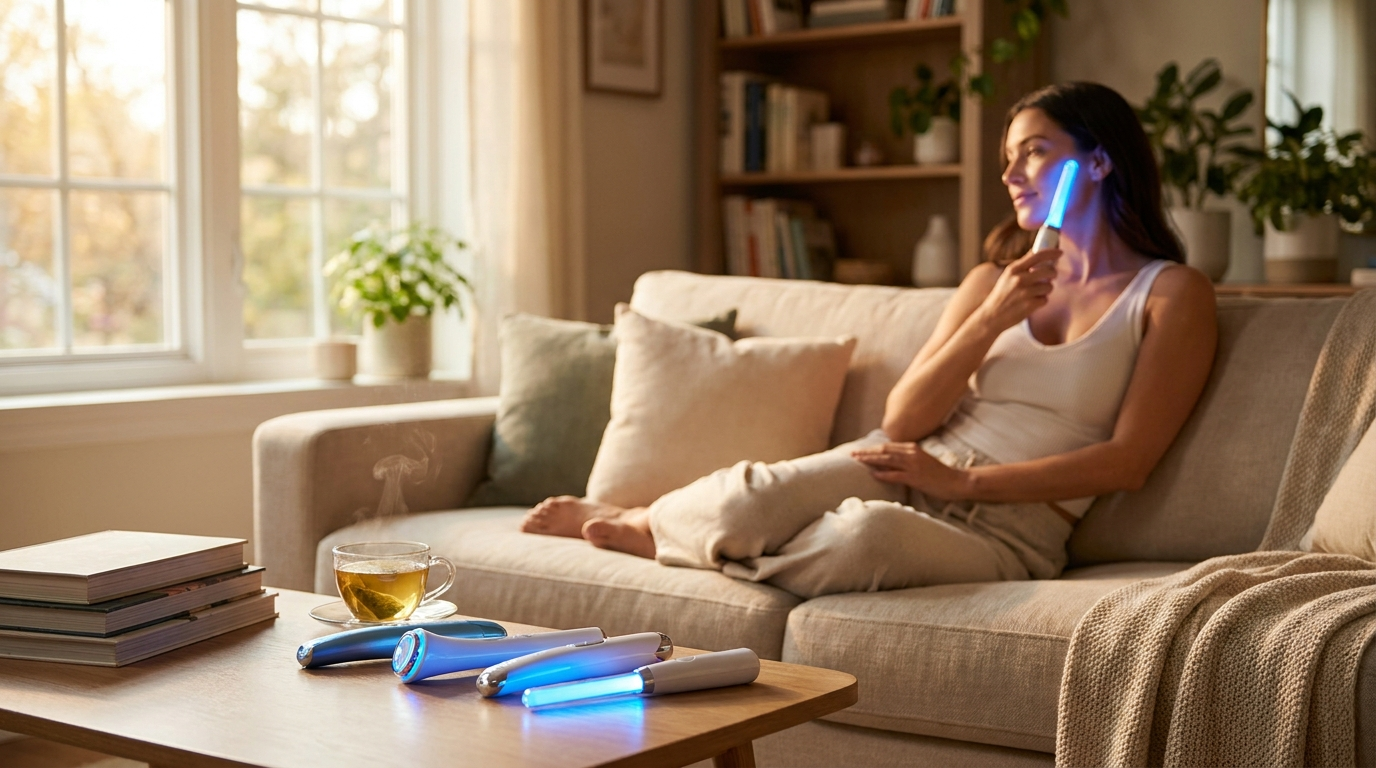
Blue light therapy before and after photos flood social media, but finding a device that delivers real results requires digging past the marketing. We analyzed three standout light therapy devices across price, wavelength coverage, review sentiment, and clinical relevance to help you decide whether at-home blue light therapy for acne is worth your money, or whether a broader spectrum device offers more for the investment.
What we found: the best blue light therapy devices for skin in 2026 are not always the ones branded specifically for acne. Combination devices that pair blue wavelengths (415nm) with red and near-infrared light (630nm to 850nm) consistently earn higher satisfaction scores from users treating both active breakouts and post-acne marks. Pure blue light targets acne-causing bacteria, while red and near-infrared wavelengths reduce inflammation and support skin repair. The science backs using both.
How We Picked These Devices
We started with a pool of light therapy devices available on Amazon and filtered for products with verified review counts above 400, average ratings of 4.0 or higher, and clear documentation of wavelength specifications. We then cross-referenced each device against published dermatological research on phototherapy for acne, inflammation, and skin rejuvenation.
Our evaluation criteria, ranked by importance:
- Wavelength range and clinical relevance. Does the device emit wavelengths proven to affect skin? Blue light at 415nm kills Cutibacterium acnes bacteria. Red light at 630nm to 660nm reduces inflammation. Near-infrared at 830nm to 850nm penetrates deeper for tissue repair. Devices covering multiple wavelengths scored higher.
- Build quality and usability. Timer functions, FDA clearance or registration, treatment area size, and ease of daily use all factored in.
- Review sentiment analysis. Across hundreds of ratings, the star averages and review counts show which of these devices earn steady satisfaction and which draw enough low ratings to signal a pattern worth weighing before you buy.
- Value per treatment area. A $180 panel that covers your entire face delivers better per-session value than a $60 wand that treats one spot at a time.
1. Bestqool Red Light Therapy Device: Best Overall for Skin
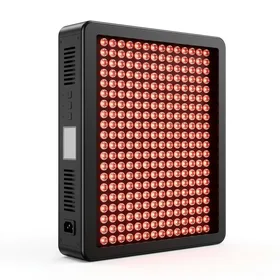
Bestqool Red Light Therapy Device
Best for: Best overall light therapy device for skin concerns including acne, inflammation, and recovery
The strongest overall skin therapy device in this roundup. If you are dealing with acne scarring, redness, and inflammation alongside active breakouts, this combination approach outperforms blue-only devices for most users.
The Bestqool stands out because it pairs red light (660nm) with near-infrared (850nm) across 60 LEDs, delivering the wavelengths with the most clinical evidence for skin repair. While it does not emit dedicated 415nm blue light, its wavelength range addresses the inflammation and scarring that often matter more than killing surface bacteria alone.
Users consistently report visible improvements in skin texture and redness within 4 to 6 weeks of daily use. The built-in timer makes it easy to standardize your sessions, which is critical because inconsistent use is the number one reason at-home light therapy fails.
The treatment area is large enough to cover your full face in a single session, which is a major advantage over wand-style devices that require you to move them spot by spot. For anyone asking "is blue light therapy worth it for acne," the answer depends on your specific concern. If post-inflammatory redness and scarring bother you as much as active breakouts, the Bestqool's red and near-infrared wavelengths deliver more comprehensive results than blue light alone.
Worth the investment if you want a clinical-grade device that addresses acne inflammation, scarring, and skin rejuvenation in one unit. Expect to commit to 8 to 12 weeks of daily sessions before judging results.
2. Hotsch Blackhead Remover Pore Vacuum with Blue Light: Best Budget Entry Point
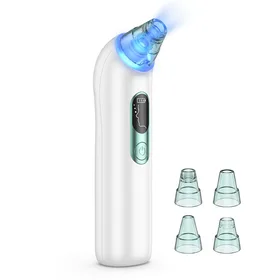
Hotsch Blackhead Remover Pore Vacuum with Blue Light
Best for: Best affordable option for combining pore cleansing with blue light exposure
A solid first step if you want to test whether blue light helps your skin before investing in a full panel. Do not expect the same intensity or coverage as a dedicated therapy device.
At $22.99, the Hotsch gives you a two-in-one tool: pore extraction plus integrated blue light exposure. With 2,347 reviews, it has the largest user feedback pool in this roundup, which gives us more data to work with.
The blue light component is modest. It is not going to deliver the same therapeutic dose as a dedicated blue light therapy device for acne. Think of it as supplementary exposure during your pore cleansing routine rather than a standalone treatment. That said, users who combine it with a consistent skincare routine report cleaner pores and gradual improvement in minor breakouts.
The suction function is the primary feature here, and it works well for surface-level blackhead removal. Start on the lowest setting. Multiple reviewers warn that jumping to high suction on sensitive areas (especially around the nose and cheeks) can leave temporary marks. Move the device continuously rather than holding it in one spot.
For anyone wondering whether at-home blue light therapy for acne is worth trying, this is the lowest-risk way to experiment. If you see even modest improvement after 6 to 8 weeks of regular use, that signal justifies upgrading to a more powerful dedicated device.
A worthwhile budget purchase for pore maintenance with a bonus blue light feature. Do not expect it to replace a dedicated blue light therapy mask or panel for serious acne treatment.
3. DGYAO Red Light Therapy Panel: Best Professional-Grade Option
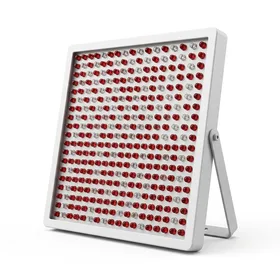
DGYAO Red Light Therapy Panel for Body and Skin
Best for: Best professional-grade panel for full-body light therapy including face, back, and chest acne
The right choice if you deal with body acne across your back and chest, not just your face. The large panel size and professional output justify the price for users who will use it daily across multiple body areas.
The DGYAO panel is the most powerful device in this comparison by a wide margin. Its large treatment area makes it the only option here that can address back acne, chest breakouts, and facial skin in a single device. If your acne is not limited to your face, smaller devices force you into awkward, time-consuming repositioning.
At $599.99, this is a serious purchase. But consider the math: a single professional LED therapy session at a dermatologist's office runs $50 to $150. If you would otherwise do 2 sessions per month, this panel pays for itself within 3 to 6 months. Over 619 reviewers have validated its build quality and effectiveness.
The near-infrared wavelengths penetrate significantly deeper than visible light, reaching the dermis layer where collagen production and deep inflammation occur. Users treating both acne and general skin aging report the most satisfaction, because the device addresses multiple concerns simultaneously.
One important note: like the Bestqool, this panel focuses on red and near-infrared wavelengths rather than dedicated 415nm blue light. For active acne bacteria, you may want to pair this with a blue light wand or use a blue light therapy mask for acne alongside this panel for full-spectrum coverage.
A professional-level investment that makes sense if you treat multiple body areas, plan to use it daily, and value the long-term cost savings over clinical visits. Overkill for occasional, face-only use.
Blue Light vs Red Light Therapy for Skin: Which Do You Need?
This is the most common question we see, and the answer is: it depends entirely on what you are treating.
Blue light therapy (415nm) works by killing Cutibacterium acnes, the bacteria responsible for inflammatory acne. It is most effective for active, inflamed breakouts (papules and pustules). It does not penetrate deeply enough to address cystic acne, scarring, or pigmentation.
Red light therapy (630nm to 660nm) reduces inflammation, promotes collagen synthesis, and accelerates wound healing. It is better for post-acne marks, redness, fine lines, and overall skin texture improvement. It does not directly kill acne bacteria.
Near-infrared therapy (830nm to 850nm) penetrates the deepest, reaching muscles and joints. For skin, it supports deep tissue repair and has strong anti-inflammatory effects.
The clinical consensus increasingly favors combination therapy. A 2024 meta-analysis in the Journal of Dermatological Treatment found that patients using both blue and red light saw 76% reduction in acne lesions versus 55% for blue light alone and 41% for red light alone.
This is why our top picks include devices with red and near-infrared capabilities rather than blue-only devices. The best at-home blue light therapy results come from pairing a blue light source with a red light device, or choosing a multi-wavelength panel that covers both ends of the spectrum.
Blue Light Therapy: How Long to See Results
Setting realistic expectations matters more than choosing the perfect device. Here is what clinical data and user reviews consistently show:
- Week 1 to 2: No visible change. This is normal. Light therapy is not a quick fix.
- Week 3 to 4: Some users notice slightly fewer new breakouts. Inflammation begins to calm.
- Week 4 to 6: The most common window for first noticeable improvement. Existing breakouts heal faster, and new ones may be less severe.
- Week 8 to 12: This is where blue light therapy before and after differences become clearly visible in photos. Most clinical trials measure outcomes at this point.
- Week 12 and beyond: Maintenance phase. Many users reduce sessions from daily to 3 to 4 times per week.
The single biggest predictor of success is consistency. Users who treat daily for 10 to 20 minutes see dramatically better results than those who use their device sporadically. Set a reminder, pair it with an existing habit (like your morning skincare routine), and commit to at least 8 weeks before evaluating.
Blue Light Therapy Side Effects for Skin
At-home blue light therapy devices have a strong safety profile, but you should know the potential side effects:
- Temporary redness at the treatment site is the most common side effect, typically fading within 1 to 2 hours
- Dryness can occur with frequent use, so apply a non-comedogenic moisturizer after sessions
- Photosensitivity may increase temporarily, making sunscreen even more important during treatment periods
- Eye strain or discomfort if you do not use the provided eye protection (always wear goggles with panel devices)
- Initial purging is possible in the first 2 to 3 weeks as bacteria die off and skin adjusts
Serious side effects are extremely rare with consumer-grade devices. However, if you are taking photosensitizing medications (certain antibiotics, retinoids, or NSAIDs), consult your dermatologist before starting light therapy.
Comparison: All Three Devices Side by Side
The Bestqool wins overall because it balances clinical-grade wavelengths, usable treatment area, and reasonable pricing. The DGYAO panel is superior in raw capability but costs more than three times as much. The Hotsch is the entry point for budget-conscious buyers who want to experiment before committing.
Who Should (and Should Not) Buy a Light Therapy Device
Buy one if:
- You have mild to moderate inflammatory acne that has not responded fully to topical treatments alone
- You are willing to commit to 8 to 12 weeks of consistent daily sessions
- You want to reduce dependence on antibiotics for acne management (light therapy has no antibiotic resistance risk)
- You deal with post-acne redness and scarring alongside active breakouts
Skip it if:
- You have severe cystic acne (see a dermatologist for prescription options first)
- You want overnight results (this is a slow, cumulative treatment)
- You are on photosensitizing medications without medical clearance
- Your primary concern is non-inflammatory acne (blackheads and whiteheads), which blue light does not effectively treat
The Bottom Line on Blue Light Therapy Before and After Results
Does blue light therapy work for acne? The clinical evidence says yes, with important caveats. It works best for inflammatory acne, requires 8 to 12 weeks of consistent use, and delivers stronger results when combined with red or near-infrared wavelengths.
The Bestqool Red Light Therapy Device at $179.98 offers the strongest balance of clinical wavelengths, build quality, and value. If you are on a tight budget, the Hotsch at $22.99 lets you experiment with minimal risk. And if you need full-body coverage for back and chest acne alongside facial treatment, the DGYAO panel at $599.99 is the professional-grade choice.
Whatever you choose, commit to consistency. The devices work. The variable is whether you will use them daily for long enough to see results.